
Harsha Man Maharjan
Many scholars have said in the virtual world, people make public many issues that they before a decade or two thought to be the matters of private life. Digital platforms and companies know the deepest secrets which people did not want to share with anybody and these companies are thriving on the private data collected with or without consent from users. States are also collecting personal data of citizens in the forms of national ID cards, smart driving license, etc. And for many people who benefit from such data this availability of a plethora of "private" information means "the end of privacy". So we have to discuss privacy in the digital world in Nepal.
It is not that there is no policy or laws to safeguard privacy in Nepal. In fact, Nepali constitutions assured right to privacy. Article 28 of the present constitution says: "The privacy of any person, his or her residence, property, document, data, correspondence and matters relating to his or her character shall, except in accordance with law, be inviolable". Constitutions are supreme laws of countries so they describe rights and responsibilities of citizens and institutions. There is also a specific law, Privacy Act, 2018 that governs the issues of privacy.
Vital legal cases
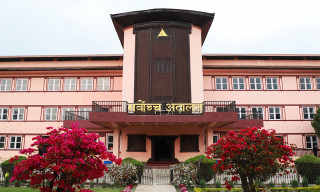
Two important legal cases created background for the privacy act. The first case is Annapurna Rana vs. Kathmandu District Court in which the Supreme Court said that the right to privacy of the body mentioned in the 1990 constitution can't be violated without the consent of the person. When her brother and mother claimed that while in India she had sexual relations with a person and had gave birth to a child, so she did not deserve to get the parental property, on February 2, 1996 Kathmandu District Court ruled that her genital and womb be examined by gynecologists. Not satisfied with this ruling, she filed a petition at Patan Appellate Court and on May 9, 1996 the court gave the similar ruling. Then the case moved to the Supreme Court and on June 8, 1998 the apex court gave the verdict that conducting virginity tests of the woman without her consent was the violation of the right to privacy enshrined in the constitution as the fundamental rights. Read Harsha Man Maharjan's article in The Rising Nepal